5 Reasons You Crash at 2pm (And the Compound Fix for Each)
The afternoon energy crash isn't one problem — it's five distinct biological failure modes, each with a different root cause and a different compound fix. Here's how to find yours.



It's 2pm. The morning's momentum is gone. You're staring at the same paragraph you started twenty minutes ago. Your last coffee isn't helping — or it helped briefly, then made things worse. The next three hours feel like something to survive rather than use.
Most advice for the afternoon crash is generic: drink more water, take a walk, avoid the post-lunch glucose spike. That's not wrong, but it misses something important. The 2pm crash isn't a single problem. It's five different biological failure modes — and they don't have the same cause, which means they don't have the same fix.
Below are the five most common mechanisms behind the afternoon wall, in descending order of how often they show up in desk athletes who spend eight or more hours in cognitive output. Read the problem description first. If it sounds like you, the solution that follows addresses the specific mechanism — not the symptom.
The Caffeine Spike-and-Crash Cycle
Caffeine works by blocking adenosine receptors — the receptors that signal accumulated fatigue to the brain. While caffeine sits in those receptors, you feel alert. When it clears, adenosine floods back in all at once, and the crash you feel isn't just the absence of alertness. It's the delayed arrival of all the fatigue signals that were waiting behind the block.
The crash gets worse over time because tolerance builds. As your brain upregulates adenosine receptors in response to daily caffeine exposure, you need more caffeine to achieve the same block — and more adenosine floods in when it clears. The afternoon crash that felt manageable six months ago has quietly become structural. The mechanism is cycling in the wrong direction.
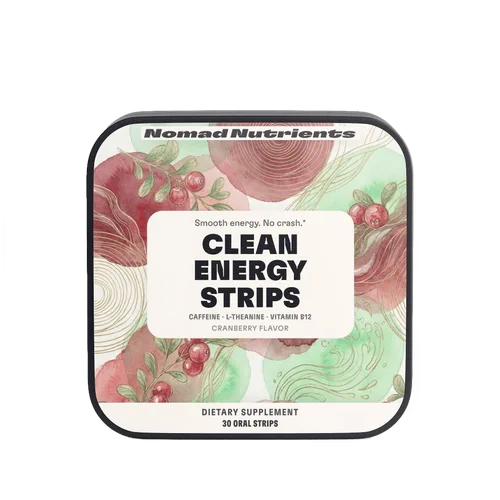
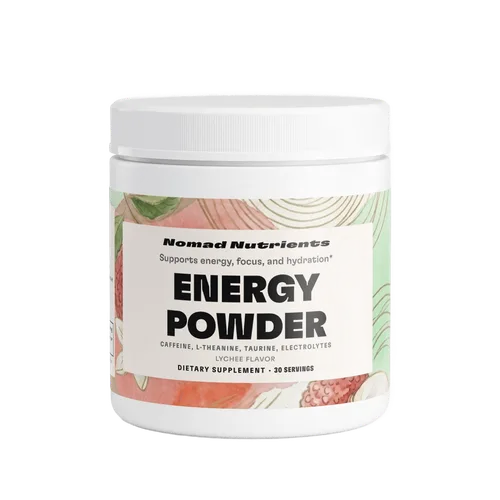
L-theanine blunts the spike by modulating the cortisol co-response that caffeine triggers — allowing the alertness without the sharp edge, and reducing the magnitude of the rebound when the caffeine clears. Clean Energy Strips deliver both compounds simultaneously in a sublingual format that reaches the bloodstream in seconds rather than the 30–45 minutes a capsule requires.
More importantly, our Smart Cycling protocol calls for five days on, two days off — the rest days are where receptor sensitivity resets. Taking the strips Monday through Friday and stepping off Saturday and Sunday means Monday's dose hits at full strength rather than fighting through a tolerance ceiling. The protocol isn't about taking less caffeine. It's about ensuring the caffeine you take keeps working.
Cortisol Load From the Morning's Accumulated Pressure
The HPA axis — your hypothalamic-pituitary-adrenal stress system — fires cortisol in response to every stressor it detects. A morning of back-to-back meetings, competing priorities, and rapid context-switching keeps cortisol elevated for hours. That sustained elevation has a direct cost on cognitive function: cortisol suppresses prefrontal cortex activity and accelerates the depletion of dopamine precursors in the brain's reward and motivation circuits.
By 2pm, you haven't hit a wall because you ran out of willpower. You've been running a low-grade stress response since 8am, and the prefrontal cortex — the hardware responsible for decision-making, sustained focus, and executive judgment — is functionally impaired by the cortisol load it's been operating under all morning.
Ashwagandha KSM-66 works at three distinct points in the cortisol cascade. At the hypothalamic level, its withanolide compounds exert GABAergic activity that quiets the initiating signal before the HPA axis fires. At the adrenal level, it modulates cortisol biosynthesis directly. And it restores glucocorticoid receptor sensitivity, which allows the HPA axis to self-regulate — to recognize when cortisol levels are high and downregulate, rather than staying stuck in an elevated baseline.
It runs eight weeks on, four weeks off in our Smart Cycling protocol — effective threshold is 300mg of KSM-66 extract daily, run for eight weeks on, then four weeks off while a swap product covers the same stress-modulation goal through a different pathway. Randomized controlled trials consistently report cortisol reductions in the 20–30% range by weeks four to eight. The effect isn't sedation. It's restoration of a regulatory system that chronic stress has disrupted.
Don't shop alone. Build with Myco.
Tell Myco your goals. He'll pull the three compounds that fit your life and time-zone — locked-in founding pricing.
Neurotransmitter Depletion From Deep Cognitive Work
Sustained focus is metabolically expensive. The cholinergic system — the network of neurons running on acetylcholine — underpins attention, working memory, and the ability to hold a complex problem in mind while working through it. Hours of deep cognitive work deplete acetylcholine availability. When the supply drops below threshold, focus fragments. You can still function, but you can't maintain the lock-in that deep work requires.
This crash typically feels different from the caffeine crash or the cortisol crash. It doesn't arrive sharply. It arrives as an inability to start the next task, a tendency toward low-bandwidth activity (checking email, reorganizing), and a frustrating sensation of mental friction on things that should feel easy. That friction is acetylcholine availability running thin.
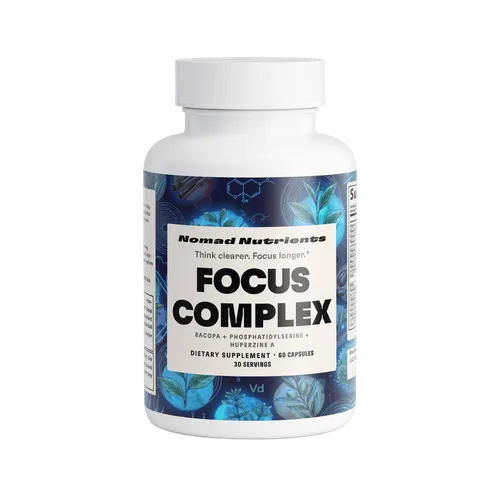
Focus Complex addresses the cholinergic system at three separate points rather than one. Alpha-GPC delivers a bioavailable choline source that the brain converts directly to acetylcholine — the raw material for the neurotransmitter itself. Bacopa monnieri, over time, improves acetylcholine receptor density — the receiving end of the signal, not just the supply. Huperzine A inhibits acetylcholinesterase, the enzyme that breaks acetylcholine down in the synapse, keeping more of it available for longer between firings.
These aren't redundant. They work at distinct points in the same system, which is why the combined approach produces outcomes that any single compound doesn't replicate. The effect on deep work lock-in is most apparent from week two onward as the cholinergic infrastructure builds rather than relying solely on acute precursor loading.
Sleep Debt Compounding Through the Day
Sleep debt is cumulative and non-linear. Each night of suboptimal sleep quality — even if the duration looks adequate — reduces the cognitive buffer you begin the next day with. The brain's adenosine clearance happens during deep slow-wave sleep. If the sleep architecture is compromised — insufficient time in slow-wave and REM stages — adenosine isn't fully cleared, and you start the next day already in deficit.
The afternoon circadian dip around 2–3pm is a normal biological phenomenon, a trough in the natural alertness rhythm. When sleep debt is running high, this trough becomes a wall. The dip that should be mild becomes pronounced enough to impair decision-making, slow processing speed, and make the remaining afternoon feel like an endurance event rather than a work session.
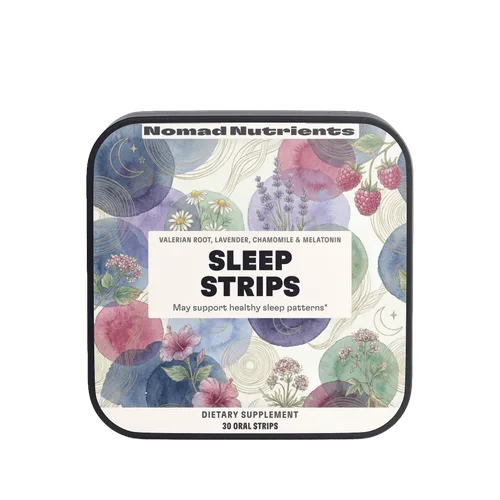
Sleep Strips dissolve sublingually in under thirty seconds, bypassing the 30–45 minute digestion window that delays capsules and gummies. The sublingual format is particularly relevant for sleep: melatonin onset speed matters because the receptor window for sleep initiation is narrow. Missing it with a slow-onset format often means lying awake while the compound is still being absorbed.
The more important mechanism is architectural. A well-formulated sleep stack doesn't just improve onset — it supports the slow-wave and REM infrastructure where actual restoration happens. Magnesium glycinate enhances GABA-A activity and NMDA suppression, providing the inhibitory conditions the nervous system needs to downregulate into deep sleep stages. Melatonin, cycled through our Smart Cycling protocol (three days on, four days off), maintains receptor sensitivity rather than blunting it. The combination addresses the architecture, not just the time it takes to fall asleep.
Mineral Depletion From Stress-Driven Cortisol Flush
Cortisol is catabolic. One of its downstream effects is increased urinary excretion of magnesium, zinc, and trace minerals — a mechanism that made sense in the context of acute physical stress (run from the threat, flush the metabolic waste), but that becomes a liability under chronic cognitive stress where the cortisol spike serves no physical purpose. A morning of sustained pressure doesn't just drain your neurotransmitters. It literally depletes the mineral supply your nervous system runs on.
Magnesium is a cofactor in over three hundred enzymatic reactions, including ATP synthesis and nerve signal transmission. Iodine is essential for thyroid hormone synthesis — T3 and T4 regulate metabolic rate, and low thyroid function produces fatigue, brain fog, and reduced stress tolerance that intensifies throughout the day. When these minerals are being flushed faster than diet replaces them, the afternoon crash isn't a willpower problem. It's a substrate problem.
Sea moss is one of the few whole-food sources that delivers 92 trace minerals in a single ingredient — including iodine, magnesium, potassium, and zinc in their naturally occurring forms alongside the mucilaginous polysaccharides that support absorption. It doesn't address the afternoon crash acutely; it addresses the chronic mineral depletion that makes the crash worse and more frequent over time.
Classified as a Daily compound in our Smart Cycling protocol — it builds cumulatively, and the thyroid and mineral-density benefits require consistent daily intake to show up as a meaningful baseline shift. The desk athlete who's been running high cortisol for months without addressing mineral repletion is often the one for whom the afternoon crash feels stuck and resistant to every other intervention. The substrate was the missing piece.
These five mechanisms are distinct, but they're not mutually exclusive. Most people running a high-output cognitive work schedule are experiencing two or three of them simultaneously — which is why the 2pm crash can feel so persistent even when you're doing everything else right. Addressing one mechanism while the others run unchecked produces marginal improvement at best.
Start with the item that most accurately described your experience. The compounds above address specific bottlenecks, not general fatigue. Stacking three of them around the failure modes most relevant to your pattern is exactly what the stack model is built for.*
*These statements have not been evaluated by the Food and Drug Administration. These products are not intended to diagnose, treat, cure, or prevent any disease.
Key Ingredients

Natural Caffeine
Caffeine (from Green Tea)

L-Theanine
L-γ-glutamylethylamide

Vitamin B12
Methylcobalamin

Ashwagandha
Withania somnifera

Black Pepper
Piper nigrum

Vitamin C
Ascorbic Acid

Potassium
Potassium Citrate

Choline
Choline Bitartrate

Valerian Root
Valeriana officinalis

Lavender
Lavandula angustifolia

Chamomile
Matricaria chamomilla

Irish Moss
Chondrus crispus
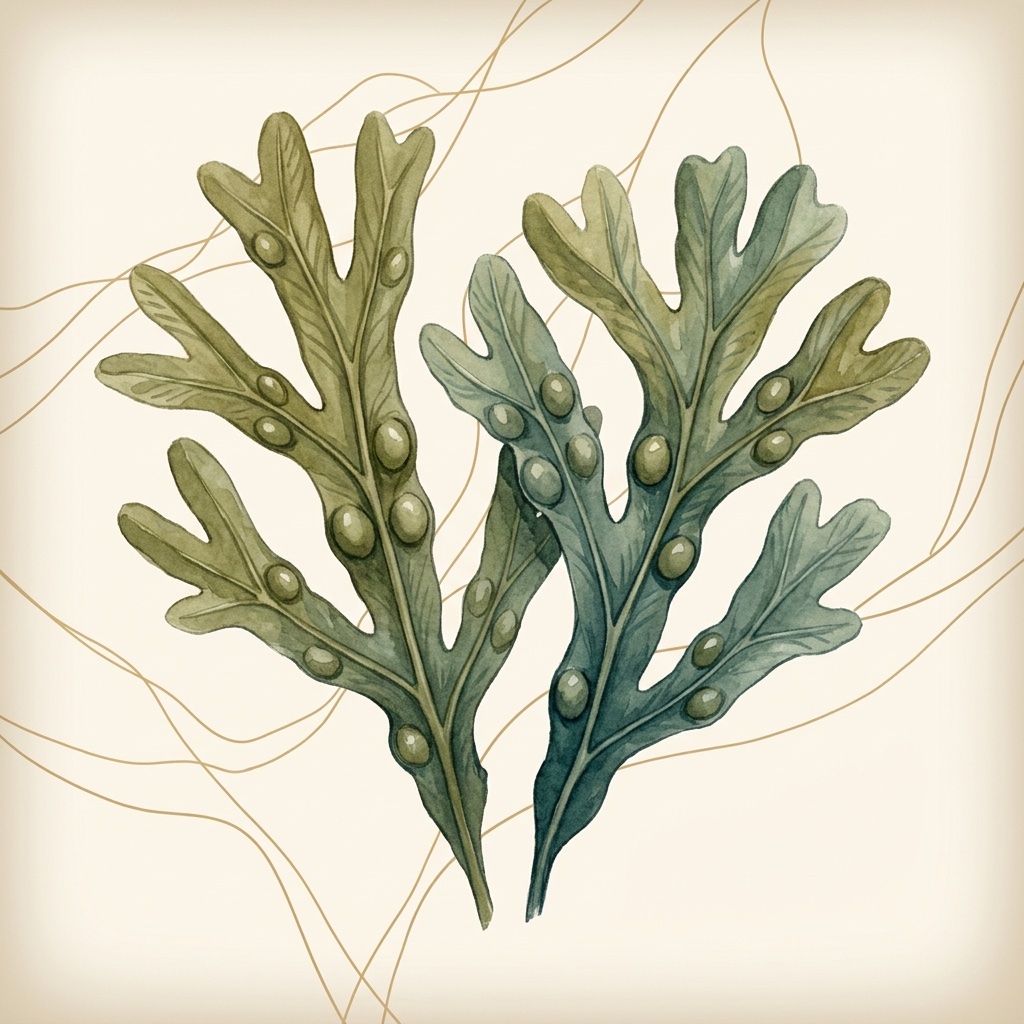
Bladderwrack
Fucus vesiculosus

Burdock Root
Arctium lappa
Three products. One protocol.
Pick 3. Save 25%. Free shipping every order. Myco cycles compounds monthly so your body never plateaus — and you never run out.
Code FIRST20 applied at checkout — extra $20 off your first stack
I built Nomad Nutrients because the supplement aisle is broken. Timing, dosing, and stack design matter more than the latest hero ingredient. We get the boring stuff right so you don't have to.
Build a stack from this article
$59.02$78.70
Comments
Leave a Comment
Keep reading.

5 Signs Your Brain Is Running on Fumes — And What to Do About Each One
Afternoon fog, expensive context-switching, decisions that drain you — these aren't productivity problems. They're physiological signals. Here's what each one means and what to do about it.

5 Stress Responses Your Body Is Running Without Your Permission
Elevated resting heart rate. Jaw tension you notice at 5pm. Racing thoughts at bedtime. These aren't personality quirks — they're involuntary physiological stress responses. Here's what's driving each one.




When to Take Every Supplement (The Complete Timing Guide)
Your body absorbs, metabolizes, and responds to nutrients differently depending on when you take them. Fat-soluble compounds taken without fat pass through you. Stimulatory adaptogens taken at night keep you up. Minerals taken together compete for the same transporters. This is the complete timing protocol — organized by window, with the pharmacokinetic reasoning behind every recommendation.




5 Supplements for Dads and Dads-to-Be
Nobody tells you that becoming a dad is a physiological event — not just an emotional one. Your sleep architecture collapses. Your cortisol stays elevated for months. Your immune system gets stress-tested by every daycare pathogen your kid brings home. And if you're not a dad yet but trying to be, your sperm quality is shaped by the same compounds that will keep you functional after the baby arrives. Five supplements that serve both sides of the transition.
6 Reasons You're Tired That Have Nothing to Do With Sleep
You're sleeping enough. You're still exhausted. Fatigue that doesn't respond to rest is almost always upstream of sleep — here are six physiological reasons and the compounds that address each one.

4 Reasons Your Focus Stack Isn't Working (And What to Change)
Single-ingredient nootropics have a ceiling. Receptor tolerance, missing cofactors, wrong timing, and unaddressed cortisol load are the four most common reasons a focus stack underdelivers.
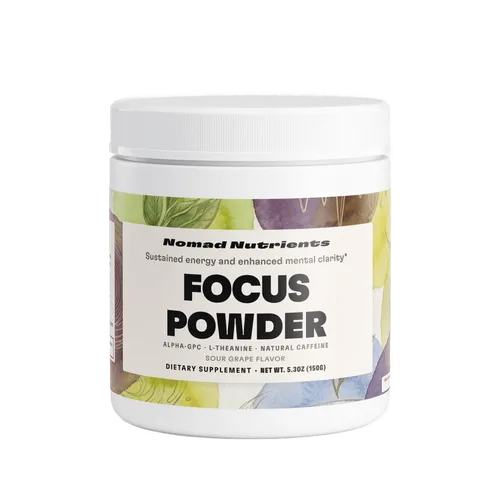

Shop the products.
Four products. Earned their place in every stack.
These float to the top of nearly every Smart Stack — broad pathway coverage, strong evidence, real doses. Curated by Myco, rotated when something better comes along.
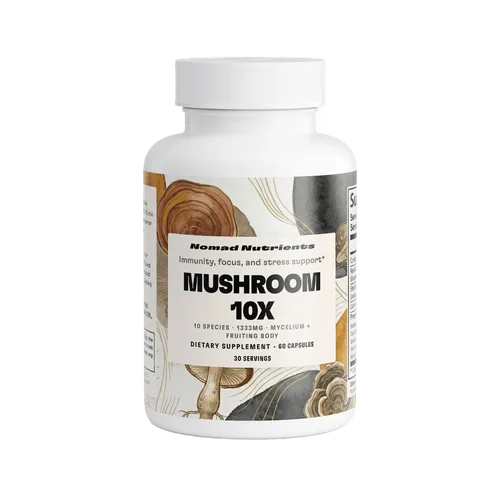
Mushroom 10X
Ten species in one capsule — the whole-spectrum support for immunity, focus, and energy.
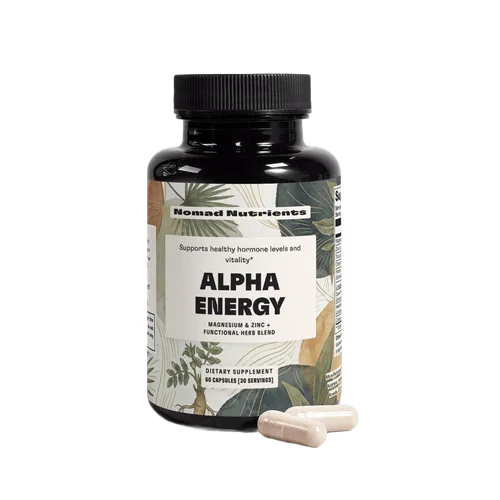
Alpha Energy
Testosterone. Energy. Drive. — Zinc, magnesium, and Tongkat Ali for natural vitality and peak performance.
Creatine Powder
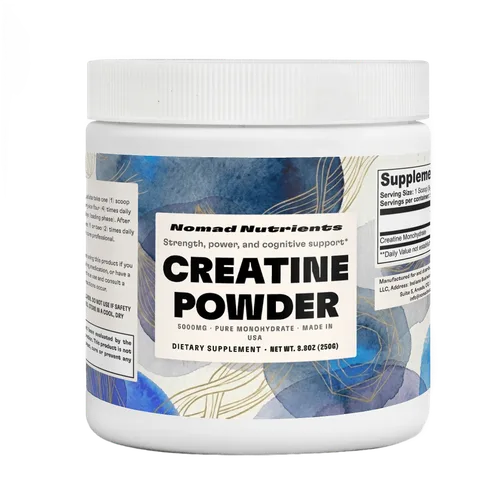
The most-studied compound on earth. 5g pure — for stronger muscle and sharper thinking.
Ashwagandha
Cortisol control, calm focus, and deep recovery — the adaptogen that earns its place in every stack.
Founder’s Story
"Hi, I'm Tanner. I built Nomad for optimizers who want a real system — not just a subscription. You choose the direction, we handle the navigation. Pick your path and we'll keep you dialed in."
— Tanner
Chief Mushroom Officer