5 Signs Your Brain Is Running on Fumes — And What to Do About Each One
Afternoon fog, expensive context-switching, decisions that drain you — these aren't productivity problems. They're physiological signals. Here's what each one means and what to do about it.



There's a specific version of underperformance that doesn't announce itself. You're not sick. You're not burned out. You're just slower than you should be — and no amount of willpower, better scheduling, or extra coffee is changing that.
The reason is usually physiological, not motivational. The brain has specific resource requirements, and when those requirements go unmet, it signals the deficit in predictable ways. Learn to read the signals and you can address the actual cause instead of managing the symptom indefinitely.
Below are five of the most common patterns — and the compounds that specifically address the mechanism behind each one.
The 2pm Crash That Coffee Can't Fix
Around 2pm, something happens. Not tiredness — you slept fine. More like a gradual thickening of everything. Sentences take longer to form. You read the same paragraph twice. Opening a new tab feels like a small act of courage. You reach for another espresso, and it helps, briefly, but the edge it gives you is jagged — more anxious than sharp.
This is not a caffeine deficiency. Caffeine blocks adenosine receptors, which creates a sensation of alertness, but it doesn't address what's actually depleted: your brain's rapid-recharge energy buffer. Neurons regenerate ATP through the phosphocreatine system — a fast-acting reserve that bridges the gap between sudden high cognitive demand and the slower mitochondrial process catching up. After hours of sustained deep work, that buffer is thin. Neural efficiency drops not because you're tired, but because your cells are running on depleted reserves that caffeine has no mechanism to replenish.
Creatine increases the total phosphocreatine pool available in brain cells — and this has been demonstrated directly through phosphorus MRI studies that can measure cerebral phosphocreatine concentrations in living tissue. More phosphocreatine means a larger rapid-recharge buffer before cognitive performance degrades under load. The research is particularly compelling under conditions of sleep deprivation and sustained cognitive stress — exactly the conditions that define most professional work days. 3–5g daily. No loading phase required. The effect builds over weeks, which is why consistency matters more than timing.
Context-Switching Costs More Than It Should
Every time you shift between tasks — a Slack message, a meeting, back to the document you were writing — there's a cognitive tax. That tax is supposed to be small. For many people doing sustained intellectual work, it stops being small. Switching feels expensive. Reloading context takes minutes you don't have. By 11am you've done six things and finished none of them, and the mental cost of the switching itself is showing up as friction on everything downstream.
The cholinergic system — the network of neurons that runs on acetylcholine — is central to attention, working memory, and the kind of focused task-switching that knowledge work demands. When acetylcholine signaling is running suboptimally, the switching cost rises. The brain has the capacity but not the raw material to execute rapidly between contexts.
Focus Complex addresses the cholinergic deficit across three pathways simultaneously. Alpha-GPC delivers a bioavailable choline source that the brain converts directly to acetylcholine. Bacopa monnieri improves acetylcholine receptor density over time — the receptors that receive the signal, not just the signal itself. Huperzine A inhibits acetylcholinesterase, the enzyme that breaks acetylcholine down, keeping more of it available in the synapse for longer. These aren't redundant — they work at distinct points in the same system, which is why the multi-ingredient approach outperforms any single compound in isolation.
Don't shop alone. Build with Myco.
Tell Myco your goals. He'll pull the three compounds that fit your life and time-zone — locked-in founding pricing.
Decisions Feel Expensive by Noon
Decision fatigue is real, but for most people it arrives much earlier than it should. By late morning — not late afternoon — the mental cost of making a judgment call feels disproportionate to what's being decided. Small choices feel heavy. You default, delay, or defer things that shouldn't require that much bandwidth. By noon, you've already spent something you can't name and can't get back.
The prefrontal cortex — the region responsible for executive function, judgment, and impulse control — is exquisitely sensitive to cortisol. Sustained elevated cortisol reduces dendritic branching in the PFC, measurably degrading the neural infrastructure responsible for decision-making. In a chronically activated HPA axis, where cortisol never fully drops between stressors, this degradation becomes a baseline condition rather than an acute one. You're not making bad decisions because you're not trying. You're making bad decisions because the hardware is running degraded.
Ashwagandha with black pepper works at three points in the cortisol cascade: restoring glucocorticoid receptor sensitivity so the HPA axis can self-regulate again, modulating cortisol biosynthesis directly at the adrenal level, and exerting GABAergic activity in the hypothalamus that quiets the initiating signal before the cascade begins. Piperine from black pepper increases ashwagandha bioavailability significantly. Cortisol reductions in the 20–30% range are consistently reported in RCTs over 60 days, with subjective improvements in decision resilience appearing in weeks two to four. This isn't blunting your stress response — it's restoring the system's ability to regulate itself.
Your Workouts Stopped Paying Off
You're putting in the sessions. The effort is there. But the adaptation — the strength gains, the body composition shifts, the recovery speed — has plateaued in a way that doesn't track with the work you're doing. You're training hard and getting less than you should for it.
ATP resynthesis speed is the rate-limiter in both physical and cognitive performance. Between sets, between sprints, between intense cognitive tasks — the phosphocreatine system is what bridges the gap between output and recovery. When phosphocreatine stores are suboptimal, you produce less force in subsequent sets, recover more slowly, and adapt at a reduced rate. The training stimulus is there; the energetic infrastructure to respond to it is the bottleneck.
Creatine monohydrate remains the most researched supplement in existence — 30+ years of human trials, a safety profile that's as clean as anything in the category, and a mechanism that's been established beyond reasonable debate. It saturates phosphocreatine stores in muscle and brain cells, raises the ceiling of high-intensity output, and accelerates recovery between efforts. The gym association is real; the gym-only association is the myth. 3–5g daily. Monohydrate. Nothing more expensive performs better — the evidence simply doesn't support it.
You Sleep 8 Hours But Wake Up Flat
Eight hours. Alarm goes off. By every metric you're supposed to feel restored — and you don't. The first hour is fog. Energy arrives late, if it arrives at all. You feel like you slept but didn't actually recover, which is almost certainly what happened.
Sleep duration and sleep quality are not the same thing. The stages that drive recovery — slow-wave sleep for physical restoration and growth hormone release, REM for cognitive consolidation and emotional processing — require the nervous system to actively downregulate into low-activation states. That downregulation depends on inhibitory mechanisms: GABA signaling, NMDA receptor suppression, melatonin production. When these mechanisms are compromised by chronic stress load, magnesium depletion, or elevated evening cortisol, you cycle through sleep stages but spend less time in the ones that matter. The hours look right. The architecture is impaired.
A well-formulated sleep stack addresses the architecture problem, not just sleep onset. Sublingual melatonin cycling restores receptor sensitivity that chronic supplementation can blunt. Magnesium glycinate restores the NMDA block and enhances GABA-A activity, giving the nervous system the raw material it needs to downregulate. L-theanine reduces sleep latency without disrupting stage cycling. Together, these work on the inhibitory infrastructure — not as sedatives, but as the conditions under which your own sleep architecture can function properly again.
Creatine + ashwagandha + melatonin strip = Build, reset, sleep
Creatine for strength, ashwagandha — an adaptogen on an 8-weeks-on rhythm — for the stress side of recovery, and a melatonin strip for the sleep it runs on.


These five signals are distinct, but they share an underlying logic: the brain has specific physiological requirements, and when those requirements go unmet, performance degrades in predictable ways. Addressing the mechanism is categorically different from managing the symptom.
Start with the signal that's loudest for you. The compounds above address specific bottlenecks — stack them as your pattern warrants, not indiscriminately. More isn't always better; targeted usually is.
Key Ingredients

Creatine Monohydrate
Creatine

Vitamin C
Ascorbic Acid

Potassium
Potassium Citrate

Choline
Choline Bitartrate

Ashwagandha
Withania somnifera
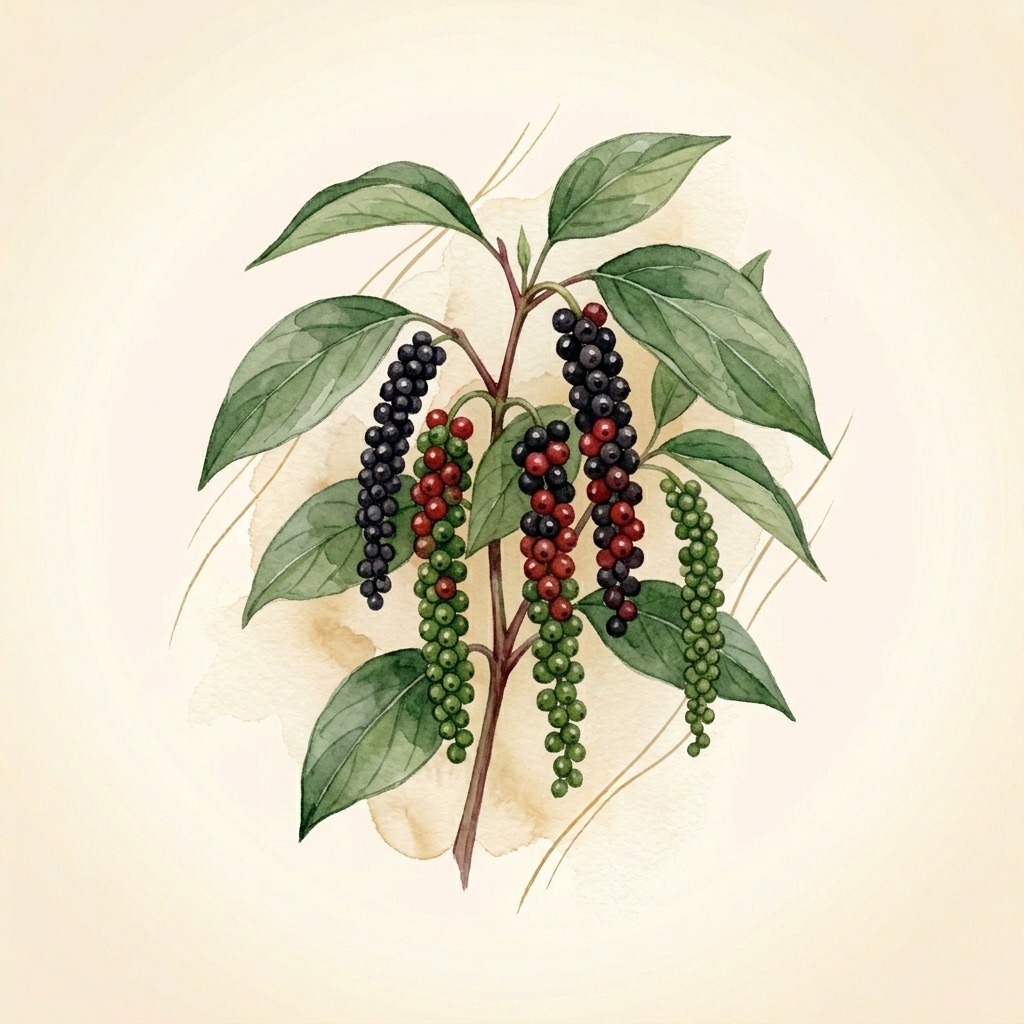
Black Pepper
Piper nigrum
Three products. One protocol.
Pick 3. Save 25%. Free shipping over $35. Myco cycles compounds monthly so your body never plateaus — and you never run out.
Code FIRST20 applied at checkout — extra $20 off your first stack
I built Nomad Nutrients because the supplement aisle is broken. Timing, dosing, and stack design matter more than the latest hero ingredient. We get the boring stuff right so you don't have to.
Build a stack from this article
$64.29$85.70
Comments
Leave a Comment
Want the mechanism behind this?
Keep reading.

5 Reasons You Crash at 2pm (And the Compound Fix for Each)
The afternoon energy crash isn't one problem — it's five distinct biological failure modes, each with a different root cause and a different compound fix. Here's how to find yours.



4 Reasons Your Focus Stack Isn't Working (And What to Change)
Single-ingredient nootropics have a ceiling. Receptor tolerance, missing cofactors, wrong timing, and unaddressed cortisol load are the four most common reasons a focus stack underdelivers.



How to Build Your First Supplement Stack (Without Wasting Money)
The supplement aisle is designed to overwhelm you into buying nothing or buying everything. Neither is correct. Here's a tiered framework — start at the foundation, add based on your goal, and only advance when the previous tier is habitual. Each tier is complete on its own. You don't need Tier 3 to benefit from Tier 1.


The 6 Supplements That Actually Have Clinical Evidence (And How to Stack Them)
Most supplements don't have clinical evidence worth citing. These six do — here's the specific research, the mechanism, and how they compound when stacked together.



Lion's Mane in 2026: Which Claims Actually Survived Peer Review?
The evidence on lion's mane is better than its critics say and more specific than its fans admit. It goes into stacks built around focus — which is exactly why we worked through all of it.

When to Take Every Supplement (The Complete Timing Guide)
Your body absorbs, metabolizes, and responds to nutrients differently depending on when you take them. Fat-soluble compounds taken without fat pass through you. Stimulatory adaptogens taken at night keep you up. Minerals taken together compete for the same transporters. This is the complete timing protocol — organized by window, with the pharmacokinetic reasoning behind every recommendation.


Four products. Earned their place in every stack.
Our most-picked products — broad pathway coverage, strong evidence, real doses.
Mushroom 10X
Ten species in one capsule — the whole-spectrum support for immunity, focus, and energy.

Alpha Energy
Testosterone. Energy. Drive. — Zinc, magnesium, and Tongkat Ali for natural vitality and peak performance.
Creatine Monohydrate Powder
The most-studied compound on earth. 5g pure — for stronger muscle and sharper thinking.
Ashwagandha
Cortisol control, calm focus, and deep recovery — the adaptogen that earns its place in every stack.
Founder’s Story
"Hi, I'm Tanner. I built Nomad for optimizers who want a real system — not just a subscription. You choose the direction, we handle the navigation. Pick your path and we'll keep you dialed in."
— Tanner
Chief Mushroom Officer