The Library · Vol. 01Entry No. 39· Chapter 05

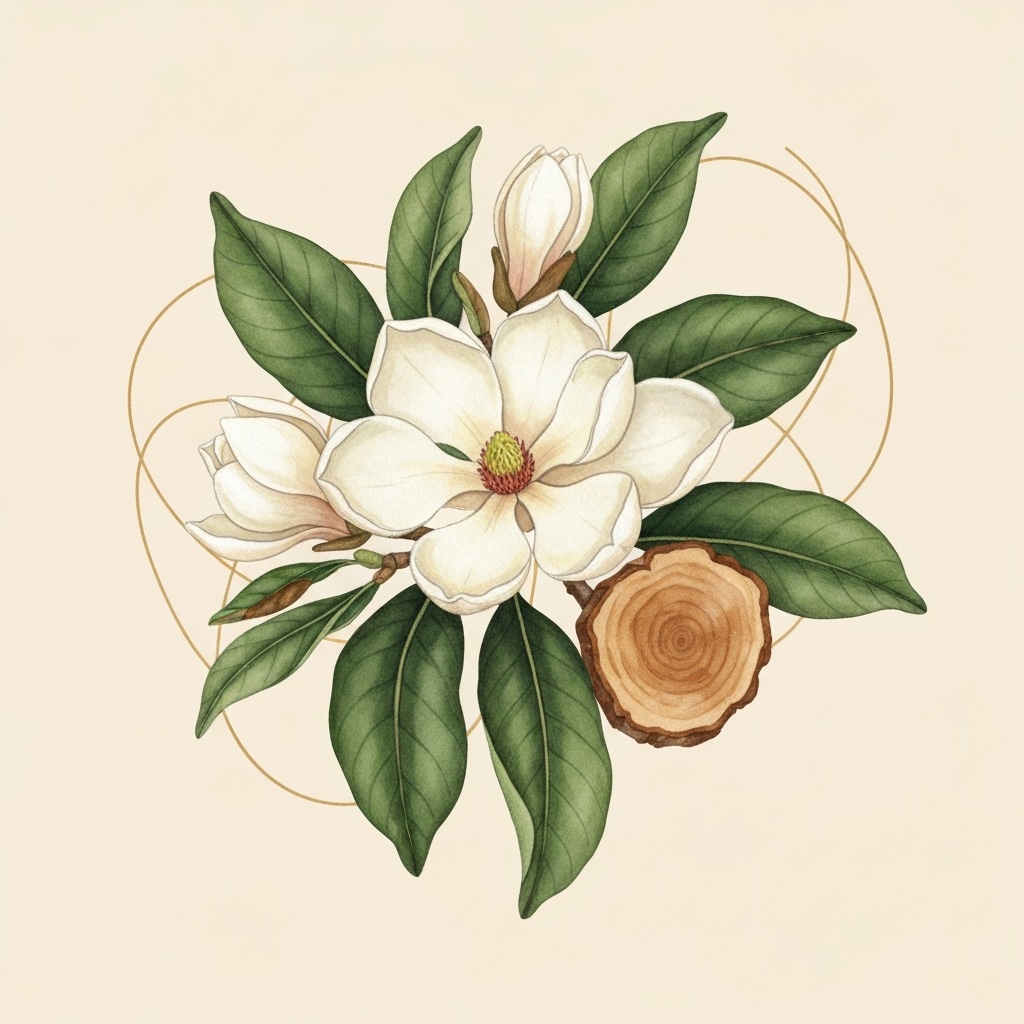
Magnolia Bark

Magnolia officinalis

The bark of the magnolia tree, used for over 2,000 years in Traditional Chinese and Japanese (Kampo) medicine. Magnolia bark is prized for its two key biphenolic neolignans — honokiol and magnolol — which have been studied for their calming, antioxidant, and skin-soothing properties.

2
Active compounds
1
In our products
05
Sleep & Mood
Magnolia Bark (Magnolia officinalis)

Magnolia officinalisBotanical illustration

§ 1The molecules

Active compounds.

No.01

Honokiol

2-(4-Hydroxy-3-prop-2-enyl-phenyl)-4-prop-2-enyl-phenol

Why this matters

  • 01Supports a calm, balanced state of mind*
  • 02Promotes the skin's natural ability to manage environmental stressors*
  • 03Helps maintain healthy antioxidant defenses*
No.02

Magnolol

5,5′-Diallyl-2,2′-biphenyldiol

Why this matters

  • 01Supports the body's healthy inflammatory response*
  • 02Helps maintain skin comfort and a clear complexion when applied topically*

*These statements have not been evaluated by the FDA. This product is not intended to diagnose, treat, cure, or prevent any disease.

§ 3Where it lives

Find Magnolia Bark in

From the Library · Vol. 01

Know exactly what
you're taking.

Every compound in your stack — sourced, dosed, and cited. No proprietary blends. Browse the science behind the bottles.

125Ingredients
189Compounds
14Chapters
Browse by chapter
Natural compounds for rest and relaxation.Showing 8 of 8 · View all

We publish every dose, every source, every paper we leaned on. An informed customer is our only kind.

Browse the full library

— End of entry

Put Magnolia Bark to work.

Browse the products it’s in, or build a stack around the goal it serves best.