⚠️Severe weather may delay shipping to some US regions
turkey-tail

Turkey Tail and Your Gut: PSK, PSP, and the Immune-MicrobiomeA Connection

Tanner GaucherMarch 12, 2026

8 min read · Filed under: Immune Health, Gut Health, Functional Mushrooms

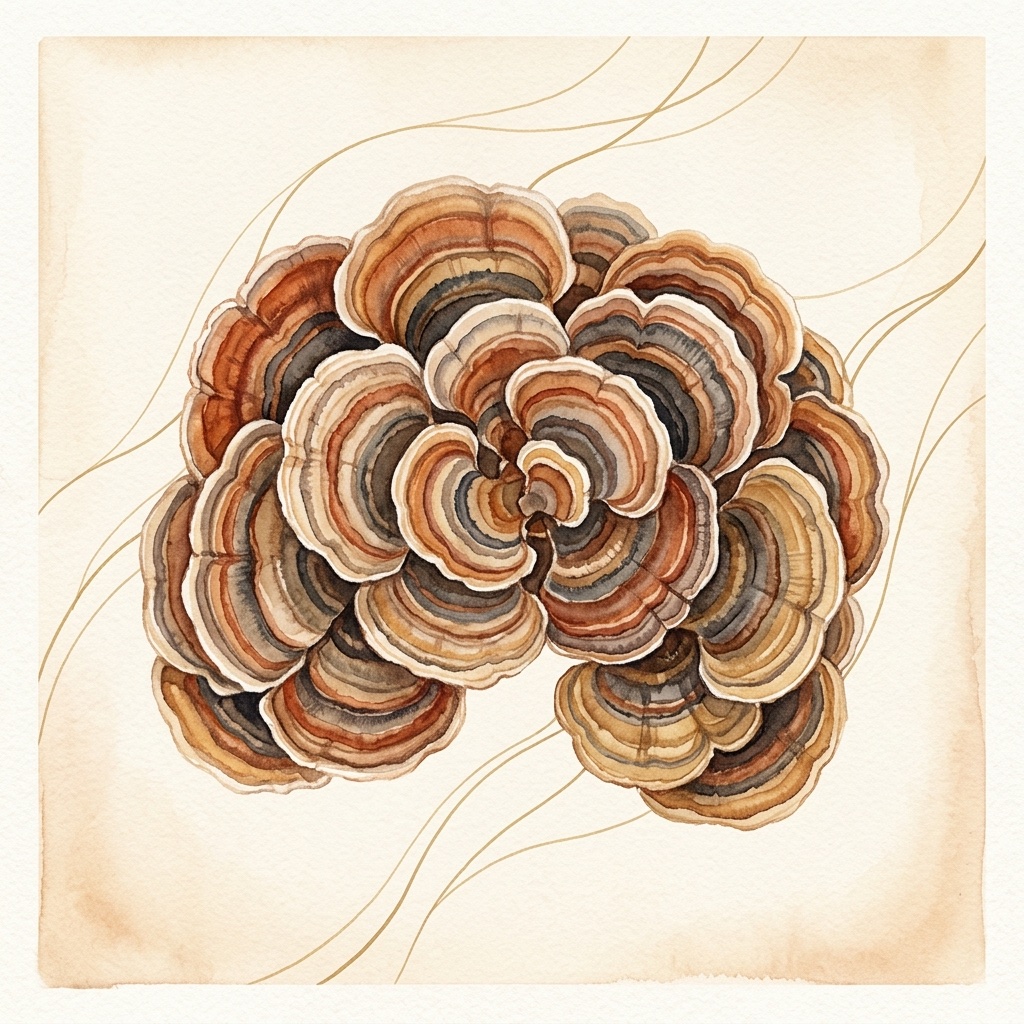
Of all the functional mushrooms, Turkey Tail (Trametes versicolor) has the most extensive human clinical record. Not because it's the most popular in supplement circles — it isn't — but because it has been studied as an adjunctive therapy in oncology for decades, particularly in Japan and China, where its primary extract (PSK) has held government approval as a cancer treatment support since 1977.

That clinical history gives Turkey Tail something most functional mushrooms lack: human data at scale, over long durations, with hard endpoints. Understanding what that data shows — and the mechanism behind it — also illuminates something broader about how gut health and immune function are connected in ways that matter for anyone, not just oncology patients.


PSK and PSP: Not Just Beta-Glucans

Turkey Tail's primary bioactives are two protein-bound polysaccharide complexes that are distinct from the beta-glucans covered in the functional mushrooms overview — though Turkey Tail contains those too.

PSK (polysaccharide-K, also called Krestin) is a protein-polysaccharide complex extracted from the CM-101 strain of Trametes versicolor. The polysaccharide backbone is a beta-glucan (β-1,4 linked with β-1,3 branch points), but what makes PSK distinct is the protein component covalently bound to it. This protein-polysaccharide complex has significantly different immunological properties than the free beta-glucan fraction — it activates immune cells through multiple receptor pathways simultaneously, including Toll-like receptors (TLR2, TLR4) in addition to Dectin-1.

PSP (polysaccharide-peptide) is a similar compound with a slightly different polysaccharide backbone and a smaller peptide component. PSP activates overlapping but non-identical immune pathways to PSK. Japanese clinical research has predominantly used PSK; Chinese research has focused more heavily on PSP.

The protein component in both compounds is not incidental — it appears integral to their full immunological activity. Free beta-glucans activate Dectin-1 effectively; the protein-bound forms activate a broader receptor repertoire and produce more sustained immune modulation as a result.

The Immune Mechanism: Multiple Simultaneous Pathways

The immunological picture for PSK is more thoroughly characterized than for almost any other mushroom compound, given the depth of the research database.

Toll-like receptor activation: TLR2 and TLR4 are pattern recognition receptors on macrophages and dendritic cells that detect conserved molecular patterns associated with pathogens. PSK's protein-polysaccharide structure activates both, triggering innate immune cascades that prime macrophage phagocytic activity, stimulate dendritic cell maturation, and bridge innate and adaptive immunity.

NK cell activation: Natural killer cells are the immune system's rapid-response cytotoxic cells — identifying and destroying abnormal cells without prior sensitization. PSK has demonstrated consistent NK cell activation across multiple human studies, increasing both NK cell count and cytotoxic activity. This is the mechanism most directly relevant to the oncology applications.

T-cell modulation: PSK supports cytotoxic T lymphocyte (CD8+ T cell) function — the adaptive immune cells that destroy specific recognized targets — while supporting regulatory T cell balance to prevent excessive inflammatory responses.

Cytokine profile: PSK promotes a Th1-dominant cytokine environment — favoring interferon-gamma and IL-2 (associated with cellular immunity) over Th2 cytokines (associated with allergic responses). For infection resistance and cellular immune surveillance, a Th1 bias is generally favorable.

The Oncology Record

The clinical database for PSK is remarkable in scope. Multiple large randomized controlled trials have examined PSK as adjunctive therapy alongside standard chemotherapy or radiotherapy in gastric, colorectal, breast, lung, and esophageal cancers.

A 2012 meta-analysis of nine RCTs found that PSK supplementation significantly improved five-year survival rates in colorectal cancer patients undergoing chemotherapy. Separate systematic reviews of gastric cancer trials found consistent improvements in disease-free and overall survival in PSK-treated groups. The effect sizes — typically meaningful absolute improvements in five-year survival across trials — represent among the strongest clinical evidence available for any mushroom compound.

The mechanism in the oncology context: PSK appears to counteract the immunosuppression that chemotherapy produces, maintaining NK cell and T cell function during treatment. It's not replacing the therapy — it's preserving immune function during it.

This record doesn't make PSK a cancer treatment. But it establishes that the immune effects of this compound are real enough to produce measurable hard-endpoint improvements in seriously ill patients under controlled trial conditions — a higher evidentiary bar than most supplements ever face.

The Gut Connection

The immune story has a gut dimension that's become increasingly significant as microbiome research has expanded.

PSK and PSP function as prebiotics: non-digestible compounds that selectively promote the growth of beneficial gut bacteria. Research has found that Turkey Tail supplementation increases populations of Bifidobacterium and Lactobacillus species — two of the most clinically significant beneficial bacterial genera — while showing inhibitory effects on potentially pathogenic species like Clostridium.

This matters because the gut microbiome and immune system are not separate systems. Approximately 70–80% of the immune system's active tissue is located in or adjacent to the gut — in the gut-associated lymphoid tissue (GALT), the network of immune cells embedded throughout the intestinal wall. The composition of the gut microbiome directly regulates GALT activity through constant chemical signaling.

Beneficial bacteria produce short-chain fatty acids (SCFAs) — particularly butyrate — as fermentation byproducts. Butyrate is the primary fuel source for colonocytes (gut lining cells), supports intestinal barrier integrity, and directly modulates immune cell differentiation in the GALT. Microbiomes with higher Bifidobacterium and Lactobacillus populations produce more SCFAs, maintain a healthier intestinal barrier, and generate a better-calibrated immune baseline.

Turkey Tail's prebiotic effect feeds directly back into immune function through the GALT. The protein-polysaccharides directly activate immune cells; the prebiotic effect supports the microbiome environment from which immune calibration originates. These are additive mechanisms acting on the same outcome through different pathways.

A 2014 study by Pallav et al. specifically examined Turkey Tail's effect on human gut microbiome composition and found significant, dose-dependent increases in Bifidobacterium and Lactobacillus populations alongside decreases in Clostridium — confirming the prebiotic mechanism in human subjects.

The Gut-Brain Extension

The microbiome connection extends beyond immune function. The gut-brain axis — the bidirectional communication between the enteric nervous system and the central nervous system — is significantly modulated by gut microbiome composition.

Lactobacillus species produce GABA precursors and influence serotonin availability. Approximately 90% of the body's total serotonin is produced in the gut, largely under the influence of the microbiome. Microbiome composition affects mood, stress reactivity, and aspects of cognitive function through these pathways. Turkey Tail's support of these populations is therefore not purely an immune story — it's a microbiome composition story with downstream implications for systems well beyond gut health.

This is a more speculative connection than the direct immune mechanisms, and should be understood as such — but it's mechanistically grounded in the established gut-brain signaling literature.

Sourcing and Quality

Turkey Tail is one of the few functional mushrooms where hot water extraction captures most of the relevant bioactives — PSK and PSP are water-soluble and hot water extraction handles them well. Dual extraction adds minor fat-soluble compounds but is less critical than for Reishi or Chaga.

Fruiting body standard applies. Validated PSK content is found in fruiting body extracts; mycelium-on-grain products have variable and often negligible protein-bound polysaccharide content.

Identification: Turkey Tail is one of the most commonly foraged and most commonly misidentified mushrooms in North America. Stereum ostrea (false turkey tail) lacks the bioactive compounds and is frequently confused with genuine Trametes versicolor. For supplementation, a verified extracted product from a reputable supplier is more reliable than wild-foraged material from an unverified source.

Typical supplemental doses range from 1–3g daily of fruiting body extract. Turkey Tail is extremely well-tolerated with minimal reported adverse effects across a large clinical database. Mild GI adjustment in the first 1–2 weeks as microbiome composition shifts is the most common transient effect.

The Honest Frame

Turkey Tail occupies a unique position in the functional mushroom category: more human clinical evidence than virtually any other mushroom compound, mechanisms operating through multiple simultaneous pathways on both immune function and gut microbiome composition, and relevance extending from oncology patients to anyone interested in a well-calibrated immune baseline and a healthy gut environment.

The gut-immune axis it supports isn't a trend — it's the emerging consensus of where immune regulation actually originates. Turkey Tail is one of the better-evidenced compounds for supporting that axis.


Turkey Tail in the Nomad Stack

If immune resilience and gut health are your primary wellness goals, we've built a stack around it.

[[ INSERT STACK NAME + LINK ]]


References

  1. Sakamoto J, et al. "Efficacy of adjuvant immunochemotherapy with polysaccharide K for patients with curatively resected colorectal cancer." Cancer Immunology, Immunotherapy, 2006.
  2. Pallav K, et al. "Effects of polysaccharopeptide from Trametes versicolor and amoxicillin on the gut microbiome of healthy volunteers." Gut Microbes, 2014.
  3. Torkelson CJ, et al. "Phase 1 Clinical Trial of Trametes versicolor in Women with Breast Cancer." ISRN Oncology, 2012.
  4. Fritz H, et al. "Polysaccharide K and Coriolus versicolor extracts for lung cancer." Integrative Cancer Therapies, 2015.
  5. Wasser SP. "Medicinal mushroom science: Current perspectives, advances, evidences, and challenges." Biomedical Journal, 2014.

Earn Free Products

Stack subscribers earn free products by referring friends

Learn more about stacks

*Referral Program: Share your unique link with friends. When a friend subscribes to a stack using your link and completes 2 consecutive shipments, you earn 1 product credit. Each credit is worth the median price of products in your current stack and can be redeemed for any product in our catalog — added as a bonus item to your next shipment. Credits have no cash value and cannot be transferred. Nomad Nutrients reserves the right to modify or discontinue the referral program at any time.

Founder’s Story

Tanner, Chief Mushroom Officer

"Hi, I'm Tanner, Chief Mushroom Officer at Nomad Nutrients. I built this for people like me—optimizers who want a flexible, all-in-one supplement stack without the hassle. Build yours, dial it in, and keep exploring."

— Tanner

Chief Mushroom Officer