⚠️Severe weather may delay shipping to some US regions
chaga

Chaga: The Antioxidant King of Mushrooms (With the ORAC Data to Prove It)

Tanner GaucherMarch 12, 2026

7 min read · Filed under: Antioxidants, Immune Health, Functional Mushrooms

The ORAC score comparison gets passed around a lot in functional mushroom circles: Chaga scores somewhere around 146,700 μmol TE/100g — versus roughly 3,000 for blueberries and 6,000 for acai. Numbers like that tend to generate skepticism, and reasonably so, because ORAC scores have been overinterpreted and oversold across the entire antioxidant supplement category.

But dismissing Chaga based on ORAC skepticism misses the more interesting story. The antioxidant capacity is real — the question is which compounds are responsible, how they work, and whether any of that activity is biologically meaningful after digestion and absorption. Those answers are more nuanced and more interesting than the headline number.


What Chaga Actually Is

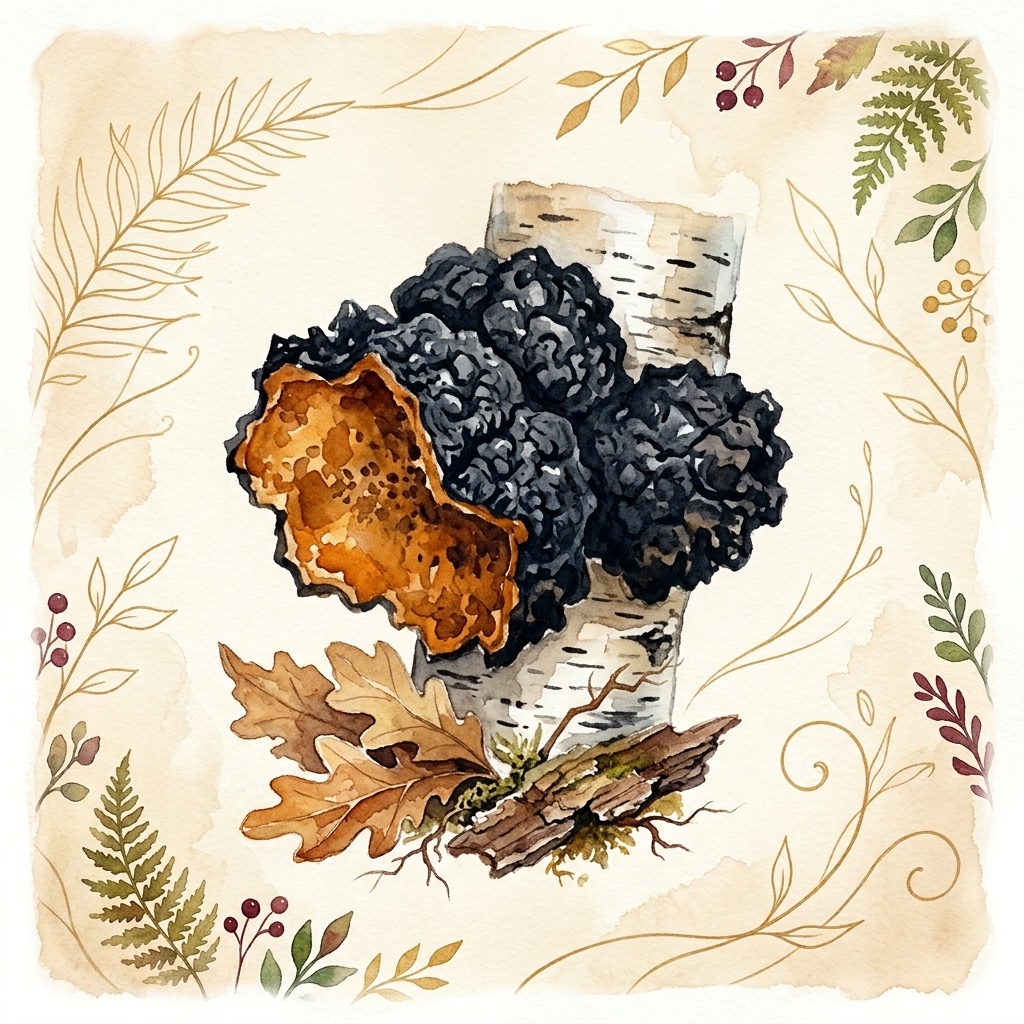
First, a clarification that most Chaga content skips: Chaga (Inonotus obliquus) is not technically a mushroom in the conventional sense. It's a parasitic fungus — a canker, technically — that grows almost exclusively on birch trees (Betula species) in cold northern climates: Siberia, Canada, Scandinavia, northern China. It forms a hard, irregular black mass on the exterior of the tree that looks like burnt charcoal.

This parasitic relationship is critical to Chaga's chemistry. The fungus doesn't just grow on birch — it actively extracts and bioconcentrates compounds from the birch tree's bark and cambium layer, particularly betulin and its derivatives. These compounds don't exist in fungi grown on other substrates, which is why cultivated Chaga (grown on sawdust or grain, without a living birch host) is a fundamentally different product from wild-harvested Chaga. The birch relationship is not incidental to Chaga's chemistry — it's constitutive of it.

The Three Antioxidant Systems

Chaga's exceptional antioxidant capacity comes from three distinct compound classes operating through different mechanisms. Understanding each separately matters because they're not redundant — they address different types of oxidative stress in different cellular compartments.

1. Melanin and the Free Radical Quench

The black exterior of Chaga — the charcoal-like crust — is almost pure melanin, one of the highest natural concentrations of melanin found in any biological material. This isn't the same melanin as in human skin (eumelanin), but a complex polyphenolic polymer derived from oxidized polyphenols.

Melanin is an extraordinarily effective free radical scavenger. Its polymer structure contains multiple electron-donating phenolic hydroxyl groups distributed across a large molecular scaffold — it can absorb and neutralize large numbers of reactive oxygen species (ROS) simultaneously, acting as a kind of molecular sponge for oxidative damage. This is the primary driver of Chaga's ORAC score and its capacity to quench free radicals in assay conditions.

The legitimate question is whether ingested melanin survives digestion and reaches systemic circulation in biologically active form. The answer is partial: melanin polymers are largely insoluble and may not absorb intact. However, lower-molecular-weight melanin precursors and degradation products do show absorption and systemic distribution, and the gut-level antioxidant activity (protecting intestinal epithelial cells from oxidative damage) is real regardless of systemic absorption.

2. Betulinic Acid: The Birch-Derived Triterpene

This is where the birch relationship becomes pharmacologically significant. Chaga concentrates betulin from birch bark and converts it enzymatically to betulinic acid — a pentacyclic triterpene with its own distinct mechanisms well beyond simple antioxidant activity.

Betulinic acid has been extensively studied for its effects on mitochondrial apoptosis pathways — it appears to selectively trigger programmed cell death in certain abnormal cell types while leaving healthy cells unaffected, which is why it has attracted significant attention in oncology research. This is a different mechanism from its antioxidant activity and operates at the level of mitochondrial membrane permeability and cytochrome c release.

For non-oncological applications, betulinic acid shows meaningful anti-inflammatory activity — inhibiting NF-κB signaling (a master transcription factor for inflammatory gene expression) and reducing downstream cytokine production. It also demonstrates antiviral properties against several viral families, including inhibition of HIV-1 replication and influenza virus activity in cell models.

Critically: betulinic acid is fat-soluble. It requires alcohol extraction or a fat-containing medium to be captured and absorbed effectively. A hot-water Chaga tea — the traditional preparation — captures the water-soluble polysaccharides and some melanin fractions but misses the betulinic acid almost entirely. This is the single most important practical point in this piece.

3. Superoxide Dismutase: Enzymatic Antioxidant Defense

Superoxide dismutase (SOD) is a different category of antioxidant altogether — not a molecule that directly scavenges free radicals, but an enzyme that catalyzes their dismutation. Specifically, SOD converts superoxide radicals (O₂⁻) into hydrogen peroxide and oxygen — neutralizing one of the most reactive and damaging ROS produced during normal cellular metabolism.

Superoxide is generated continuously in the mitochondrial electron transport chain as a byproduct of ATP synthesis. Your body produces endogenous SOD (there are three mammalian isoforms: Cu/Zn-SOD, Mn-SOD, and extracellular SOD) specifically to manage this constant superoxide production. The efficiency of SOD activity is a significant determinant of mitochondrial health and cellular aging rate.

Chaga contains measurable quantities of SOD — some analyses have found Chaga among the highest natural food sources of SOD activity. The biological question is again absorption: SOD is a protein enzyme, and proteins are hydrolyzed in the GI tract before absorption. Whether intact SOD enzyme survives digestion and enters circulation is unlikely. However, the constituent amino acids and copper/zinc/manganese cofactors that support the body's own SOD synthesis do absorb and contribute to endogenous SOD production.

Additionally, some of Chaga's polyphenolic compounds show SOD-mimetic activity — they replicate SOD's electron transfer chemistry without being the enzyme itself, and these smaller molecules have better prospects for absorption and systemic distribution than the enzyme.

Beta-Glucans and Immune Function

Chaga also contains beta-glucans — the same β-1,3/1,6 structured polysaccharides found in other functional mushrooms that activate innate immune function via Dectin-1 receptors on macrophages and dendritic cells. The immune story is real and follows the same mechanism described in the functional mushrooms overview piece.

One distinction worth noting: because Chaga is a parasitic fungus growing in direct contact with its host tree, its beta-glucan profile and polysaccharide composition is somewhat different from conventionally cultivated mushrooms. Some research suggests Chaga's polysaccharides include unique structural variants that modulate immune function through additional receptor pathways beyond Dectin-1.

Wild-Harvested vs. Cultivated: Why It Matters More for Chaga Than Any Other Mushroom

For most functional mushrooms, the fruiting body vs. mycelium distinction is the critical quality variable. For Chaga, there's an additional and more fundamental distinction: wild-harvested on birch vs. cultivated without birch.

Cultivated Chaga — grown on sawdust, grain, or other substrate without a living birch host — cannot produce betulinic acid. Without the birch-derived betulin precursor, the enzymatic conversion to betulinic acid simply doesn't occur. A cultivated Chaga product may contain beta-glucans and some melanin, but it is missing the compound most distinctive to wild-harvested Chaga. It's not a lower-quality Chaga product — it's a categorically different product.

Wild-harvested indicators: Product should specify wild-harvested and ideally the geographic source (Siberian and Canadian birch forests are the benchmark sources). Betulinic acid or betulin content should be listed or available on a certificate of analysis. Wild-harvested Chaga is more expensive — if pricing seems equivalent to other mushroom products, that warrants investigation.

A sustainability note: Chaga harvest removes a living structure from a birch tree. Sustainable wild harvesting leaves a portion of the conk intact and avoids over-harvesting from individual trees. Reputable suppliers should have sourcing practices that account for this.

Extraction and Preparation

Given the three distinct compound classes and their different solubility profiles:

Hot water extraction: Captures water-soluble beta-glucans, polysaccharides, and some melanin fractions. Traditional Chaga tea is a hot water extraction. Good for immune and water-soluble antioxidant applications.

Alcohol extraction: Necessary to capture betulinic acid and other fat-soluble triterpenes. Without this step, the birch-derived triterpene fraction is largely absent from the product.

Dual extraction: Captures both fractions. For a complete Chaga product with the full compound spectrum, dual extraction is the appropriate standard.

Raw powder: Unextracted dried Chaga powder contains all the compounds but requires your digestive system to extract them — which, given the tough chitin cell wall structure, it cannot do efficiently. Extraction concentrates and liberates the bioactives; raw powder largely does not.

Dosage and Practical Considerations

Research on Chaga in humans is thinner than for some other functional mushrooms — most of the mechanistic work comes from in vitro and animal studies. Clinically, Chaga is used in the 1–3g daily range for extracted product, though standardization varies widely.

One precaution worth noting: Chaga contains high levels of oxalates — among the highest of any food source. Regular consumption of large amounts of raw or crude Chaga (particularly as tea made from raw chunks) may be a concern for individuals prone to kidney stones or with oxalate-related conditions. Properly extracted products have lower oxalate content than crude preparations, but this is worth being aware of for high-dose or long-term use.

Blood-thinning medication interactions have been reported anecdotally, plausibly related to Chaga's effects on platelet aggregation. Those on anticoagulants should consult a physician.

The Honest Frame

Chaga's antioxidant capacity is real, but the ORAC number is the least interesting part of the story. The more compelling case is the combination of melanin-based free radical quenching, birch-derived betulinic acid with its anti-inflammatory and apoptotic activity, SOD-mimetic polyphenols, and beta-glucan immune modulation — each operating through a distinct mechanism.

That full profile only comes from wild-harvested, dual-extracted product. A cultivated Chaga tea is a different product with a different (and more limited) compound set. The distinction matters enough that it should be the first question asked when evaluating any Chaga supplement.


Chaga in the Nomad Stack

If antioxidant defense and immune resilience are your primary wellness goals, we've built a stack around it.

[[ INSERT STACK NAME + LINK ]]


References

  1. Glamoclija J, et al. "Antioxidant and antimicrobial activity of extracts from Inonotus obliquus." Food Research International, 2015.
  2. Géry A, et al. "Chaga (Inonotus obliquus), a Future Potential Medicinal Fungus in Oncology?" Journal of Gastrointestinal Cancer, 2018.
  3. Zheng W, et al. "Isolation of betulin and betulinic acid from Chaga and their cytotoxic activity." Natural Product Research, 2011.
  4. Nakajima Y, et al. "Antioxidant small phenolic ingredients in Inonotus obliquus." Chemical & Pharmaceutical Bulletin, 2007.
  5. Kim YO, et al. "Immuno-stimulating effect of the endo-polysaccharide produced by submerged culture of Inonotus obliquus." Life Sciences, 2005.

Earn Free Products

Stack subscribers earn free products by referring friends

Learn more about stacks

*Referral Program: Share your unique link with friends. When a friend subscribes to a stack using your link and completes 2 consecutive shipments, you earn 1 product credit. Each credit is worth the median price of products in your current stack and can be redeemed for any product in our catalog — added as a bonus item to your next shipment. Credits have no cash value and cannot be transferred. Nomad Nutrients reserves the right to modify or discontinue the referral program at any time.

Founder’s Story

Tanner, Chief Mushroom Officer

"Hi, I'm Tanner, Chief Mushroom Officer at Nomad Nutrients. I built this for people like me—optimizers who want a flexible, all-in-one supplement stack without the hassle. Build yours, dial it in, and keep exploring."

— Tanner

Chief Mushroom Officer