⚠️Severe weather may delay shipping to some US regions
eurycomanonehpg-axislongjackshbgtestosteronetongkat-ali

Tongkat Ali: Upstream Hormonal Support Without Exogenous Hormones

Nomad Nutrients EditorialMarch 17, 2026

8 min read · Filed under: Energy, Recovery, Hormonal Support

The supplement industry has a testosterone problem. Not a deficiency problem — a messaging problem. The moment a compound gets associated with testosterone, it gets buried under bodybuilding marketing, inflated claims, and an audience that's already decided what it wants to hear.

Tongkat Ali deserves better than that, because its mechanism is genuinely interesting and fundamentally different from what most people assume.

It doesn't supply testosterone. It doesn't contain testosterone precursors. It doesn't directly stimulate testosterone synthesis. What it does is work upstream — modulating the hormonal signaling cascade and the binding proteins that determine how much of your existing testosterone is actually available to your tissues. That distinction isn't semantic. It's the difference between adding fuel and removing the kink in the fuel line.
The System It's Working On

Testosterone production in males is governed by the hypothalamic-pituitary-gonadal (HPG) axis — a three-node feedback loop structurally similar to the HPA axis discussed in the ashwagandha article. The hypothalamus releases GnRH in pulsatile bursts. GnRH stimulates the anterior pituitary to release luteinizing hormone (LH). LH travels to Leydig cells in the testes, triggering the enzymatic conversion of cholesterol into testosterone.

The system self-regulates. When testosterone levels rise sufficiently, the hypothalamus and pituitary detect this and reduce GnRH and LH output. This negative feedback loop keeps testosterone within a homeostatic range — and it's also why exogenous testosterone (injections, gels, patches) suppresses the entire upstream axis. When you add testosterone from outside, the HPG axis reads it as "enough" and shuts down endogenous production. Remove the exogenous source, and it takes weeks to months for the axis to restart.

Tongkat Ali sidesteps this problem entirely by working within the feedback loop, not around it.

Two Mechanisms, One Compound

The primary bioactive compound in Tongkat Ali (Eurycoma longifolia) root extract is eurycomanone, a quassinoid. Research has identified two distinct mechanisms by which it influences testosterone availability.

The first is SHBG displacement. Sex hormone-binding globulin is a carrier protein that binds testosterone in the bloodstream. Roughly 60 to 70% of circulating testosterone is bound to SHBG and biologically inactive — it can't enter cells or activate androgen receptors. Only free testosterone (about 2 to 3%) and loosely albumin-bound testosterone are bioavailable. Eurycomanone has been shown in vitro to competitively bind SHBG, displacing testosterone and increasing the free fraction without changing total production.

The second is upstream LH support. Animal studies have demonstrated that Tongkat Ali extract increases LH levels, suggesting a stimulatory effect on the hypothalamic-pituitary portion of the axis. The exact molecular target isn't fully characterized, but the net effect is increased endogenous testosterone synthesis driven by the body's own signaling — meaning the negative feedback loop remains intact.

<div data-diagram="25-tongkat-ali-01-hpg-axis-shbg"></div>

Together, these mechanisms produce a meaningful increase in bioavailable testosterone without suppressing the HPG axis. This is the critical advantage over exogenous hormone therapy and the reason Tongkat Ali has attracted serious research interest for age-related testosterone decline.

The Cortisol Connection

There's a third mechanism worth understanding, and it connects Tongkat Ali to the broader adaptogen conversation.

Cortisol and testosterone share a precursor: pregnenolone, synthesized from cholesterol. Under chronic stress, the adrenal glands consume a disproportionate share of pregnenolone for cortisol production. The result is that chronically elevated cortisol is associated with suppressed testosterone — not necessarily because cortisol directly inhibits testosterone synthesis, but because the upstream substrate is being diverted.

Additionally, cortisol itself has direct inhibitory effects on GnRH pulse frequency. Chronic stress reduces the hypothalamic signal that initiates the entire HPG cascade.

A 2013 placebo-controlled trial by Talbott et al. gave 63 moderately stressed adults 200 mg of standardized extract daily for four weeks. The treatment group showed a 16% reduction in salivary cortisol and a 37% improvement in the testosterone-to-cortisol ratio. These aren't trivial numbers for a four-week intervention.

<div data-diagram="25-tongkat-ali-02-cortisol-testosterone-seesaw"></div>

This dual action — cortisol reduction plus testosterone support — positions Tongkat Ali at the intersection of adaptogenic and hormonal supplementation. Where ashwagandha addresses the cortisol side primarily through GABA agonism and HPA axis modulation, Tongkat Ali addresses both sides simultaneously with stronger emphasis on the testosterone side.

The Clinical Evidence — Honestly

The human trial data is growing but still limited in scale. The most rigorous studies have been conducted at the Forest Research Institute of Malaysia (FRIM), which maintains the most extensively characterized extract (standardized to 1.0 to 1.6% eurycomanone).

Key findings across published trials: improvements in free testosterone and testosterone-to-cortisol ratio in both stressed and healthy populations; improvements in semen quality parameters in subfertile men; and modest but consistent improvements in subjective energy, mood, and well-being scores. No significant adverse effects at standard doses over intervention periods up to 12 weeks.

What the evidence does not support: dramatic increases in total testosterone in healthy young men with normal hormonal profiles. Tongkat Ali is not a performance-enhancing drug in the bodybuilding sense. Its primary utility is in correcting suboptimal testosterone availability caused by stress, aging, or elevated SHBG — conditions that are common in men over 30 living under chronic professional load.

Sourcing and Standardization

Look for extracts standardized to eurycomanone content — typically 1 to 2% in quality products. The most studied form is a patented water extract (often labeled as LJ100 or Physta). Raw root powder is poorly characterized and inconsistently potent.

Source geography matters. Malaysian and Indonesian Eurycoma longifolia have the most documented phytochemical profiles. The market contains a meaningful amount of adulterated product — third-party testing or a recognizable patented extract provides some assurance.

Dosage and Timing

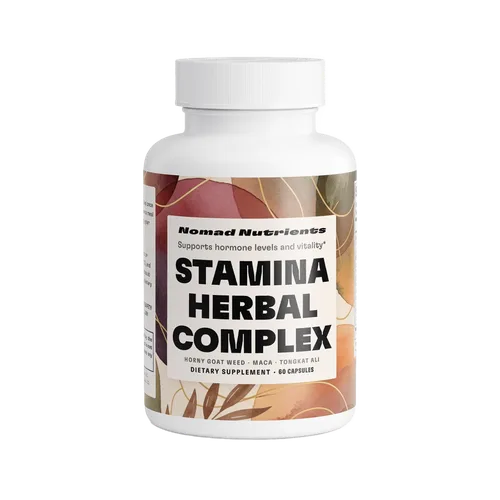
200 to 400 mg daily of a standardized extract. Best taken in the morning — some users report a mild stimulatory effect that can interfere with sleep if dosed late.

Cycling (five days on / two days off, or three weeks on / one week off) is commonly recommended in traditional Southeast Asian use. Clinical trials have typically used continuous daily dosing without reported issues, but the cycling precaution isn't unreasonable.

Note: Tongkat Ali contains quassinoids, which are intensely bitter. Capsules are the pragmatic format.

The Honest Frame

Tongkat Ali is the hormonal optimization tool for people who don't want to touch exogenous hormones. It works within the body's existing regulatory architecture, amplifying signals rather than overriding them. For professionals operating under chronic low-grade stress — the exact conditions that depress the HPG axis and elevate cortisol — it addresses the hormonal consequences of that stress without requiring medical supervision.

The evidence isn't dramatic. The mechanism is sound. And for the specific population it's designed for — stressed, aging, and running on a suppressed hormonal baseline — the correction it offers is meaningful and difficult to achieve through lifestyle alone.

Tongkat Ali in the Nomad Stack

If energy, stress resilience, and hormonal support are your primary wellness goals, we've built a stack around it.

[[ INSERT STACK NAME + LINK ]]

References

  1. Talbott SM, et al. "Effect of Tongkat Ali on stress hormones and psychological mood state in moderately stressed subjects." Journal of the International Society of Sports Nutrition, 2013.
  2. Tambi MI, et al. "Standardised water-soluble extract of Eurycoma longifolia on men's health." Andrologia, 2012.
  3. Henkel RR, et al. "Tongkat Ali as a potential herbal supplement for physically active male and female seniors." Phytotherapy Research, 2014.
  4. Thu HE, et al. "Eurycoma longifolia as a potential adoptogen of male sexual health: a systematic review on clinical studies." Chinese Journal of Natural Medicines, 2017.
  5. Rehman SU, et al. "Review on a traditional herbal medicine, Eurycoma longifolia." Molecules, 2016.
From the Journal

Learn About These Ingredients

acetylcholineMar 17, 2026

Alpha-GPC: The Choline Source That Actually Reaches Your Brain

Not all choline sources cross the blood-brain barrier equally. Choline bitartrate mostly feeds the liver. CDP-choline is better. Alpha-GPC bypasses the saturable choline transporter entirely by entering the brain via the phospholipid transport system — a different, higher-capacity pathway. This article maps the choline source hierarchy, the ACh synthesis cycle, and why pairing Alpha-GPC with Huperzine A creates one of the most mechanistically complete nootropic stacks available.

Read more
gaba-aMar 17, 2026

Taurine: The Longevity Molecule Hiding in Plain Sight

Taurine is the most abundant free amino acid in your body, and until 2023, science couldn't fully explain why. The landmark Singh et al. study in Science revealed that taurine levels decline 80% across the human lifespan — and restoring them in animal models extended healthy lifespan by 10–12%. This article maps taurine's four distinct physiological roles (neurological, hepatic, mitochondrial, cardiac), the age-related depletion curve, and why this may be the most undervalued longevity intervention currently available.

Read more
calcitriolMar 17, 2026

Vitamin D3 + K2: The Calcium Routing Problem Nobody Talks About

D3 increases calcium absorption. K2 tells the calcium where to go. Without K2, supplementing D3 at high doses may improve bone mineralization while accelerating vascular calcification — solving one problem by creating another. This article explains the osteocalcin and MGP routing system, the MK-4 vs. MK-7 decision, and why latitude determines whether supplementation is optional or non-negotiable for anyone who changes cities with the seasons.

Read more

Founder’s Story

Tanner, Chief Mushroom Officer

"Hi, I'm Tanner, Chief Mushroom Officer at Nomad Nutrients. I built this for people like me—optimizers who want a flexible, all-in-one supplement stack without the hassle. Build yours, dial it in, and keep exploring."

— Tanner

Chief Mushroom Officer