⚠️Severe weather may delay shipping to some US regions

Shilajit: Ancient Mineral Pitch, Modern Performance Compound

Tanner GaucherMarch 12, 2026

8 min read · Filed under: Energy, Performance, Foundations

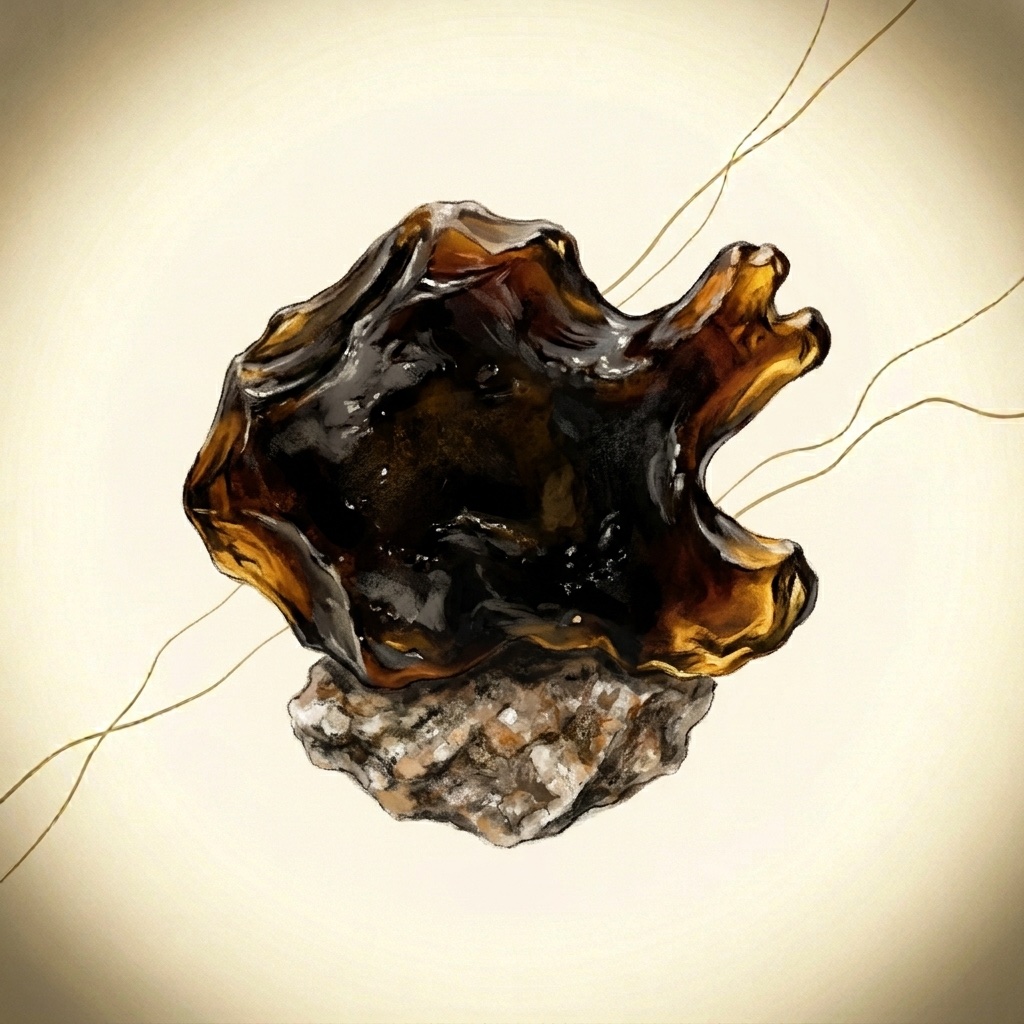
Shilajit doesn't fit neatly into the supplement taxonomy. It's not a plant extract, not a synthesized compound, not a vitamin. It's a tar-like resin that seeps from rock faces in high-altitude mountain ranges — the Himalayas, Altai, Caucasus — formed over millennia by the compression and humification of organic plant matter. It looks like asphalt. It smells ancient. And it contains a class of bioactive compounds that modern biochemistry is only beginning to map properly.

The instinct is to file it under "folk medicine with a good marketing story." That instinct is wrong. The mechanism is real, the clinical data is growing, and the compounds involved interact with cellular energy systems at a level that most supplements never touch.


What Shilajit Actually Is

Shilajit is the end product of an extraordinarily long biological process. Over hundreds to thousands of years, plant material — particularly Himalayan plant species rich in triterpenes and phenolic compounds — gets compressed between rock layers, subjected to microbial action, and transformed into a humic substance complex. The result is a resin containing over 80 identified minerals in ionic form, along with two compound classes that are the primary focus of modern research: fulvic acid and dibenzo-alpha-pyrones (DBPs).

These aren't incidental components. They're the mechanism.

Fulvic Acid: The Cellular Transport Layer

Fulvic acid is a low-molecular-weight humic substance — small enough to cross cell membranes, which is unusual for a compound of its complexity. This membrane permeability is what makes it functionally interesting rather than just chemically interesting.

Inside the cell, fulvic acid operates as a multi-role carrier molecule. Its structure contains multiple oxygen-bearing functional groups (carboxyl, hydroxyl, carbonyl) that allow it to chelate — bind to — mineral ions and transport them across cellular membranes with high efficiency. This is one reason shilajit's mineral content is considered more bioavailable than equivalent minerals from other sources: the fulvic acid acts as a natural delivery vehicle, shuttling ionic minerals directly into cells rather than leaving absorption to passive diffusion.

But the more significant function is what fulvic acid does inside the mitochondria.

Fulvic acid has been shown to interact directly with the mitochondrial electron transport chain — the series of protein complexes embedded in the inner mitochondrial membrane that generate ATP through oxidative phosphorylation. Specifically, it appears to act as an electron shuttle, facilitating electron transfer between complexes and reducing the likelihood of electron leak. Electron leak is what happens when electrons escape the chain before reaching Complex IV and react with oxygen to form reactive oxygen species (ROS) — free radicals that damage mitochondrial membranes and DNA over time.

By keeping electrons moving efficiently through the chain, fulvic acid supports both ATP output and mitochondrial integrity simultaneously. This is the biochemical basis for the energy effects reported with shilajit — not stimulation, not adenosine blockade, but actual improvement in the efficiency of the machinery that generates cellular energy.

Dibenzo-Alpha-Pyrones: The CoQ10 Amplifier

DBPs are carbon-60 based compounds unique to shilajit — you won't find them in meaningful concentrations anywhere else. Their primary mechanism involves Coenzyme Q10 (CoQ10), and understanding it requires a brief look at what CoQ10 actually does.

CoQ10 is a fat-soluble molecule that serves as the critical electron carrier between Complexes I/II and Complex III of the mitochondrial electron transport chain. It exists in two forms: ubiquinone (oxidized, accepts electrons) and ubiquinol (reduced, donates electrons). The continuous cycling between these two forms is what keeps the electron transport chain moving. CoQ10 is also a potent mitochondrial antioxidant in its ubiquinol form, neutralizing ROS directly at the site of production.

The problem: CoQ10 degrades. Ubiquinone that gets oxidized beyond its normal redox cycling becomes metabolically inert — it sits in the membrane, takes up space, and doesn't work. DBPs appear to regenerate degraded CoQ10, converting inactive oxidized forms back into the active ubiquinol form. Research has shown that shilajit supplementation increases the ratio of active to inactive CoQ10 in mitochondrial membranes — more functional CoQ10 cycling means more efficient electron transport, more ATP output, and better mitochondrial antioxidant capacity.

This is additive to CoQ10 supplementation, not redundant with it. Supplemental CoQ10 increases the pool. Shilajit increases the proportion of that pool that's actually working.

The Testosterone and Hormonal Data

Shilajit has a documented effect on male hormonal parameters — this is the piece that gets the most attention, and it's worth examining mechanistically rather than just citing the numbers.

The relevant pathway: testosterone synthesis in Leydig cells of the testes requires adequate mitochondrial function. The rate-limiting step — transport of cholesterol across the mitochondrial membrane to the site of steroidogenesis — is energy-dependent and sensitive to mitochondrial efficiency. The hypothesis is that shilajit's improvement of mitochondrial function in Leydig cells supports the energetic conditions for optimal testosterone synthesis, rather than directly stimulating a hormonal pathway.

A randomized, double-blind, placebo-controlled study of 96 infertile men supplementing with shilajit for 90 days found significant increases in total testosterone, free testosterone, and FSH, alongside improvements in sperm parameters. A separate trial in healthy male volunteers aged 45–55 found similar results — statistically significant increases in total and free testosterone versus placebo over 90 days.

These are real findings from controlled trials. The effect size isn't dramatic — shilajit is not a hormonal intervention in the pharmaceutical sense — but it's consistent with the mitochondrial mechanism, and it's been replicated.

Sourcing and Safety: The Part That Actually Matters

This is where shilajit requires more diligence than almost any other supplement category, because the sourcing risk is genuinely significant.

Raw shilajit collected from rock faces in high-altitude regions can contain heavy metals — lead, arsenic, mercury — concentrated from the geological environment. Processing quality is the difference between a safe, effective product and one that delivers a meaningful heavy metal load alongside its bioactive compounds.

What to look for:

Third-party heavy metal testing. This is non-negotiable. A reputable shilajit product will have a certificate of analysis (COA) from an independent lab confirming that lead, arsenic, cadmium, and mercury are below established safety thresholds. If a company won't provide this, don't buy the product.

Purification method. Sun-purified shilajit resin (traditional method) and water-purified extracts are both considered acceptable. Solvent-based extraction processes introduce their own contamination risks and are generally considered inferior.

Form. Authentic shilajit resin (the tar-like raw form) contains the full spectrum of bioactive compounds. Powdered extracts standardized to fulvic acid percentage are more convenient and consistent in dosing, but quality varies significantly by manufacturer. Standardization to at least 50% fulvic acid is a reasonable benchmark for extracts.

Origin disclosure. Himalayan and Altai shilajit are generally considered the highest quality sources. Products that don't disclose origin should be treated with skepticism.

The lack of regulatory scrutiny in this category means counterfeit and adulterated products are genuinely common. This is a case where paying more for a verified, tested product isn't optional.
Dosage and Expectations

Research protocols have used doses ranging from 250–500mg daily of standardized extract, typically taken with meals. Fat-soluble compounds in shilajit absorb better in the presence of dietary fat.

Onset of effects varies by what you're measuring. Energy and cognitive effects are reported anecdotally within 2–4 weeks. Hormonal parameter changes in the trials were measured at 90 days. Like most compounds working at the mitochondrial level, this is a long-game supplement — the mechanism is real but the timeline is measured in months, not days.

Shilajit is generally well-tolerated at studied doses. It is not recommended during pregnancy. Those with hemochromatosis (iron overload) should exercise caution, as shilajit's mineral transport properties may increase iron absorption.

The Honest Frame

Shilajit is unusual in the supplement landscape because its primary mechanism — mitochondrial electron transport optimization and CoQ10 regeneration — is genuinely novel. Most supplements work on receptor systems, neurotransmitter pathways, or nutrient cofactor roles. Shilajit works on the machinery that generates energy itself.

That's a compelling mechanism. The clinical data, while still growing, is consistent with it. The sourcing requirement is real and shouldn't be dismissed.

For the biohacker looking to work upstream of everything else — to optimize the cellular energy system that every other function depends on — shilajit is worth taking seriously. Not as an ancient remedy with a modern rebrand. As a compound with a real mechanism that we're still learning to fully characterize.


Shilajit in the Nomad Stack

If energy production and long-term performance are your primary wellness goal, we've built a stack around it.

[[ INSERT STACK NAME + LINK ]]


References

  1. Biswas TK, et al. "Clinical evaluation of spermatogenic activity of the root of Ashwagandha." Andrologia, 2009.
  2. Pandit S, et al. "Clinical evaluation of purified Shilajit on testosterone levels in healthy volunteers." Andrologia, 2016.
  3. Carrasco-Gallardo C, et al. "Shilajit: A Natural Phytocomplex with Potential Procognitive Activity." International Journal of Alzheimer's Disease, 2012.
  4. Stohs SJ. "Safety and Efficacy of Shilajit." Phytotherapy Research, 2014.
  5. Bhattacharyya S, et al. "Fulvic acid from shilajit: effect on mitochondrial function." Phytotherapy Research, 2009.

Earn Free Products

Stack subscribers earn free products by referring friends

Learn more about stacks

*Referral Program: Share your unique link with friends. When a friend subscribes to a stack using your link and completes 2 consecutive shipments, you earn 1 product credit. Each credit is worth the median price of products in your current stack and can be redeemed for any product in our catalog — added as a bonus item to your next shipment. Credits have no cash value and cannot be transferred. Nomad Nutrients reserves the right to modify or discontinue the referral program at any time.

Founder’s Story

Tanner, Chief Mushroom Officer

"Hi, I'm Tanner, Chief Mushroom Officer at Nomad Nutrients. I built this for people like me—optimizers who want a flexible, all-in-one supplement stack without the hassle. Build yours, dial it in, and keep exploring."

— Tanner

Chief Mushroom Officer